The read-along for Mary Green starts today, so here is a little book club guide, for those who are interested in a little extra background reading.
1. Why did you write this book?
Mary Green is the kind of book I would want to read. I wrote it because I love the novels of Jane
Austen, drawing room dramas with a light-hearted tone and sentences I can sink my teeth into—a
romantic story that is not a romance novel, that is thoroughly researched in terms of the historical
setting and yet fun to read.
2. What would you like people to take from your work?
I just want them to enjoy it. I believe that whenever we invest in a story, whenever we are moved by
someone else's experience, true or fictional, it cultivates
our empathy and makes us a more compassionate
person. Mary Green is a story that readers can just relax
and sink into, an engaging and enjoyable diversion. It
doesn't try to teach anyone anything directly, but the
characters are very real, at least to me, and that is what
I want to give people, just the experience of reading it.
3. Give us a little insight into the background of the
story?
This story is set in the early 1800s, in a time known as
the Regency Period. It is before the Industrial
Revolution, so almost everything is done by hand. The
Napoleonic Wars are off and on again during this time,
so the proportion of men to women is quite small. The
American Revolution and the French Revolution are a
few decades past and colonialism, especially in India, is
in full swing. There is a fascination with all things eastern
and classical. Ladies' fashions involve muslins and silks
from India worn in a style reminiscent of ancient Greek
togas, for example. Feudalism is mostly gone, thanks to
the Agricultural Revolution, and there are a lot of migrant
workers leaving the countryside for the cities. There is
very little in the way of a middle class at this time.
People tend either to be gentry or paupers, and women
had very few options to support themselves. They were about a century away from getting the
right to vote, for example, and relied mostly on marriage as the primary means of security.
4. What kind of experience could I provide my book club that would give them some
insight into the characters and their experiences?
To set the mood for Mary Green, anything that brings to mind Jane Austen and her contemporaries
would be appropriate. The only music people had ready access to was what people could make
themselves, particularly on the piano, which was a fairly new invention at the time. Scotch and Irish
airs were easily as popular, if not more so, than the classical music we now associate with the
period. So those would be appropriate, as would anything by Haydn, or The Arrival of the Queen of
Sheba by Handel.
I recommend serving tea in china cups, or even hot chocolate, which was the
only way chocolate was consumed at the time and was quite an expensive and indulgent drink. It
should be prepared with actual chocolate, melted and mixed with hot milk. To make it more
authentic, you can add spices and other flavours like nutmeg, cinnamon, chilli, lavender, orange
water, etc.
This would be quite fitting, as drinking chocolate features repeatedly in the second half
of the book. Although we think of scones with cream and jam as typical of anything old and English
(and so delicious, they would really not be amiss anywhere), they actually only became popular in
the Victorian era, well after the Regency era when this book is set. Little sweet-meats would have
been served, like tiny biscuits that could fit on one's saucer. Any squares cut small would be
perfect, or Persian or Indian sweets, which are quite similar to what was eaten in England 200
years ago.
For more involved dishes, the Jane Austen Centre website has some great recipes,
which can be found here: https://www.janeausten.co.uk/online-magazine/regency-recipes/.
One
simple yet classic refreshment is syllabub. Simply whip two cups of whipping cream and as it starts
to thicken, add 1/2 cup of white sugar and a couple of tablespoons of either white wine or lemon
juice and a couple more of lemon zest. Chill and serve with grated nutmeg, sprigs of mint, slices of
lemon, or anything your heart desires.
Showing posts with label Publishing. Show all posts
Showing posts with label Publishing. Show all posts
Saturday, 14 May 2016

Sunday, 1 May 2016
What is a "Read-Along" anyway?
Have you ever read a book, and wished that you could find someone else who had read it, so that you could talk about it? I suppose that's why people join book clubs. But sometimes, you don't belong to a book club, and maybe you haven't got time to find one, or even time to go to one if you could find one. And then once you join the book club, you would have to convince everyone else to read the book that you just read. And even if you are successful in convincing them, you would have to wait until they all read it. If, like me, you can't get it together to do all of this, if you haven't got the patience to wait through all of that, and just want to talk to about the book while it is still fresh in your mind, and you're still excited about it, then maybe a read along would be worth joining instead. You might miss out on the snacks and beverages of a real life book club, but you get to stay in your pyjamas and you can always make your own tea.
So what is a read along, then? Basically, it's an online book club. Book bloggers sometimes do them and post as they go and invite discussion etc. on their blog. In the coming month, Edmonton's newest publishing house, Stonehouse, is doing a read along of the five books it is releasing in May 1, all by Alberta authors. So if you want to get in on supporting local authors and being part of the buzz, you might want to see if any of their offerings interest you.
The read along will involve a spotlight each week on a different book, with book club guides and author interviews and book trailers on the publisher's website, as well as a hashtag for each book that you can use to participate in the discussion on social media sites. And if you have your own blog and want to discuss the books on your site, all the better. You will be in good company, as a few bloggers are already signed on to do just that.

May 6-13

May 13-20
May 20-27
So what is a read along, then? Basically, it's an online book club. Book bloggers sometimes do them and post as they go and invite discussion etc. on their blog. In the coming month, Edmonton's newest publishing house, Stonehouse, is doing a read along of the five books it is releasing in May 1, all by Alberta authors. So if you want to get in on supporting local authors and being part of the buzz, you might want to see if any of their offerings interest you.
The read along will involve a spotlight each week on a different book, with book club guides and author interviews and book trailers on the publisher's website, as well as a hashtag for each book that you can use to participate in the discussion on social media sites. And if you have your own blog and want to discuss the books on your site, all the better. You will be in good company, as a few bloggers are already signed on to do just that.
Here are the dates of the read along for each of the five Stonehouse titles (More details and ordering info can be found on the Stonehouse website):

May 6-13
Edge of Wild by Danika Stone
A mystery-thriller set in 1990's Waterton, Alberta.
#EdgeofWild
#EdgeofWild

May 13-20
Mary Green by Melanie Kerr (that's me!)
An Austen-like tale of an orphan girl set in 19th Century England.
#MaryGreen


May 20-27
Kalyna by Pam Clark
A story of love, heartbreak and internment among the Ukranian settlers of war-time Alberta.
#Kalyna


May 27-June 2
Course Correction by Doug Morrison
A maffia, spy thriller set in modern Ukraine.
#CourseCorrection
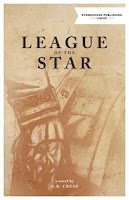

June 2-9
League of the Star by N R Cruise
The saga of a French family exiled in England following the revolution.
#LeaugeoftheStar
Wednesday, 8 October 2014
IndieBRAG and quality control: the future of self-publishing
The trouble with self-publishing is that there is no quality control. At its heart, this is the reason nobody (or almost nobody) will take independent authors seriously. My book, for example, is self-published, and it is actually a good book, but you kind of have to take my word for it. With traditionally published books, the publishing house has thought the book readable and good enough to put its own money behind it in the belief that people will like it enough and buy enough copies to make their investment worthwhile. And they do know about books and publishing. It is kind of what they do. You can at least trust that, although you may not like the book itself, it will meet certain objective standards. Not so with self-published books.
 Anyone can print any garbage, and nobody can stop them. And people always think their own writing is good. There is no filter. This is part of what makes self-publishing so great. Sometimes, you know you've got a good project, and either you don't want to give it away to some vampire publisher, or you just can't get the attention of traditional publishers for some reason. So instead, you can just do whatever you want. It is like the Wild West. You don't have to convince some stuffy, conservative publisher to back your book just to see it in print. You can put all your own entrepreneurial gusto into pushing your art and doing it your own way. I love this.
 However, because nobody knows you from Adam, and there are SO MANY truly terrible self-published books out there, and nobody has time to sort the wheat from the chaff, nobody will pay you any mind as a self-pub no matter how good your book is: not booksellers, not distributors, and in many cases not even our beloved book bloggers.
There are a few exceptions to this, but as an author you seriously have to work for them. You have no assumptions in your favor. Even assisted self-publishing services that claim to have a good reputation for making your book good don't mean much to anyone and never really will because of greedconomics (a term I just made up right now). They don't risk their own money on you. You pay them.
So basically you are down to reviews and awards as the only ways to objectively demonstrate that your book is ACTUALLY good. Both of these are flawed, or perhaps I should say of limited assistance to the indie author. Reviews and ratings are completely subjective (see my earlier post). And even good ones can't always be trusted because you can actually BUY good ratings and reviews. Plus, you actually have to get people to go to the third-party ratings site and look you up, and read the reviews, and make up their minds as to which ones are legitimate and reasonable and make a decision about what to think. Most people in the book world don't have time to do that for every self-published title that gets shoved in front of them by an eager author claiming their own genius.
 As for awards, they only get given to one title in an entire category. You either win or you don't. Most readers want to read more than one book in a year, and not every book that readers will enjoy will win an award. Also, there are not book awards for every kind of book. Take my book for example. It is Jane Austen fan fiction. There is not a specific book award for that. Sure, there are romance awards, and historical fiction awards, but my book is more niche than what they are looking for. It's not an exact fit.

And you have to find all the book awards, which is a huge job unto itself, and you might miss some because you are an indie author and you are doing this all yourself and you are kind of drowning.
Also, and more importantly, most book awards do not accept submissions from self-published authors, so an indie author's options are limited in that respect. And then, if you are kind of an ignorant first-timer like me, you may not realize that pretty well all book awards only consider unpublished manuscripts, so when you go trying to submit your already published book to the few awards you might have qualified for, you realize you are done for.
Well then, it seems a hopeless business, or so you might think. Or, like me, you might attend a book fair and get to thinking...

...what the self-publishing world really needs is someone to take the guess work out for everyone else. It needs a centralized, independent screening process, a quality-control certification board, if you will. If one reliable organization could review self-published books and just give them a pass or fail, it would save everyone so much work. And if folks could trust the benchmark of that organization, if it was actually consistent and reliable, it would be glory days for everyone. Authors could just show their seal of approval, and get treated like a "proper" published author.
Bookstores could safely stock local, independent books with confidence and without spending their whole lives researching individual titles. Same goes for distributors. Even publishers and agents would know which self-published books would be worth considering. It would be an instant filter for all those players. They would just have to ask the indie author whether or not they had that seal of approval and that would end the matter. No more having to convince people of your book's merit. No more having to sort through reviews and claims to verify whether a book is worth the investment. It would, in a word, be brilliant.
So, who is going to start this quality control certification process? I thought of trying my hand at it myself, and was embarking on putting such a thing together when, Ha-ha! I discovered someone already had!
An international network of readers calling themselves IndieBRAG (Independent Book Readers Appreciation Group) offers this precise service. They are independent and quickly building a reputation for identifying excellence in self-publishing with their Medallion. And, yes, they gave one to Follies Past (thank-you, thank-you). But I assure you, this does not prejudice me in my opinion. I was quite shocked when I discovered them because I was in the process of creating the exact same thing. I was actually kind of relieved because they were doing such a good job of it, so I could leave it to them and move on to other things.

They have a 2-step vetting process by which they apply their standards, and the books are read by multiple readers before a determination is made. Books are judged on plot, writing style, characters, copy editing, dialogue and design. There is no limit to the number of Medallions they award, but they average about a 10% approval rate. Now, that is not to say that 10% of all self-published books meet their standards, only those whose authors know about this service and have the wits to appreciate its value and importance and the wherewithal to actually submit their work.
So far as I am aware, they are the only organization taking on this task, and from what I know about them, they are doing all the things I would wish them to do, making it much easier to relinquish my plan of doing it myself. I believe that this kind of quality control is the missing link that is essential to the future of self-publishing. If you are part of the book world, as it were, and you would like to see good self-published books get the attention they deserve, I encourage you to ask those indie authors who approach you about their book whether or not they have a Medallion from IndieBRAG.
And if you are an indie author, I highly recommend submitting your book to IndieBRAG. It only costs $20, which is less than the submission fees for many book awards.
Please feel free to share any or all of this post. I waive all rights to its content in hope that it might help spread the word about this game-changer.
Melanie Kerr is the author of Follies Past: a Prequel to Pride and Prejudice.
Read Chapter 1 Watch the Trailers Buy the Book
However, because nobody knows you from Adam, and there are SO MANY truly terrible self-published books out there, and nobody has time to sort the wheat from the chaff, nobody will pay you any mind as a self-pub no matter how good your book is: not booksellers, not distributors, and in many cases not even our beloved book bloggers. There are a few exceptions to this, but as an author you seriously have to work for them. You have no assumptions in your favor. Even assisted self-publishing services that claim to have a good reputation for making your book good don't mean much to anyone and never really will because of greedconomics (a term I just made up right now). They don't risk their own money on you. You pay them.
So basically you are down to reviews and awards as the only ways to objectively demonstrate that your book is ACTUALLY good. Both of these are flawed, or perhaps I should say of limited assistance to the indie author. Reviews and ratings are completely subjective (see my earlier post). And even good ones can't always be trusted because you can actually BUY good ratings and reviews. Plus, you actually have to get people to go to the third-party ratings site and look you up, and read the reviews, and make up their minds as to which ones are legitimate and reasonable and make a decision about what to think. Most people in the book world don't have time to do that for every self-published title that gets shoved in front of them by an eager author claiming their own genius.

And you have to find all the book awards, which is a huge job unto itself, and you might miss some because you are an indie author and you are doing this all yourself and you are kind of drowning.
Also, and more importantly, most book awards do not accept submissions from self-published authors, so an indie author's options are limited in that respect. And then, if you are kind of an ignorant first-timer like me, you may not realize that pretty well all book awards only consider unpublished manuscripts, so when you go trying to submit your already published book to the few awards you might have qualified for, you realize you are done for.
...what the self-publishing world really needs is someone to take the guess work out for everyone else. It needs a centralized, independent screening process, a quality-control certification board, if you will. If one reliable organization could review self-published books and just give them a pass or fail, it would save everyone so much work. And if folks could trust the benchmark of that organization, if it was actually consistent and reliable, it would be glory days for everyone. Authors could just show their seal of approval, and get treated like a "proper" published author.
Bookstores could safely stock local, independent books with confidence and without spending their whole lives researching individual titles. Same goes for distributors. Even publishers and agents would know which self-published books would be worth considering. It would be an instant filter for all those players. They would just have to ask the indie author whether or not they had that seal of approval and that would end the matter. No more having to convince people of your book's merit. No more having to sort through reviews and claims to verify whether a book is worth the investment. It would, in a word, be brilliant.
So, who is going to start this quality control certification process? I thought of trying my hand at it myself, and was embarking on putting such a thing together when, Ha-ha! I discovered someone already had!
An international network of readers calling themselves IndieBRAG (Independent Book Readers Appreciation Group) offers this precise service. They are independent and quickly building a reputation for identifying excellence in self-publishing with their Medallion. And, yes, they gave one to Follies Past (thank-you, thank-you). But I assure you, this does not prejudice me in my opinion. I was quite shocked when I discovered them because I was in the process of creating the exact same thing. I was actually kind of relieved because they were doing such a good job of it, so I could leave it to them and move on to other things.
They have a 2-step vetting process by which they apply their standards, and the books are read by multiple readers before a determination is made. Books are judged on plot, writing style, characters, copy editing, dialogue and design. There is no limit to the number of Medallions they award, but they average about a 10% approval rate. Now, that is not to say that 10% of all self-published books meet their standards, only those whose authors know about this service and have the wits to appreciate its value and importance and the wherewithal to actually submit their work.
So far as I am aware, they are the only organization taking on this task, and from what I know about them, they are doing all the things I would wish them to do, making it much easier to relinquish my plan of doing it myself. I believe that this kind of quality control is the missing link that is essential to the future of self-publishing. If you are part of the book world, as it were, and you would like to see good self-published books get the attention they deserve, I encourage you to ask those indie authors who approach you about their book whether or not they have a Medallion from IndieBRAG.
And if you are an indie author, I highly recommend submitting your book to IndieBRAG. It only costs $20, which is less than the submission fees for many book awards.
Please feel free to share any or all of this post. I waive all rights to its content in hope that it might help spread the word about this game-changer.
Melanie Kerr is the author of Follies Past: a Prequel to Pride and Prejudice.
Read Chapter 1 Watch the Trailers Buy the Book
Monday, 1 September 2014
Warning: Follies Past was not actually written by Jane Austen. Also, it is not a Margaret Atwood book.
I recently read a post on book blog Reading-in-Bed which spoke of author's rights to express their views, and in particular to respond to reviews of their work. This inspired me to share my own views about book reviews generally, or actually I should say book ratings. Hopefully it will spark a debate and ultimately a scandal on social media, in turn making me into a household name. Wouldn't that be nice.
 Let me begin by thanking anyone who has ever written a review of my book, however brief or critical. There is no greater gift to an indie author than to leave a review of their book, on your own blog, on Goodreads, on Amazon, anywhere, and I assure you, I feel the gift of every review posted of my book. My comments, I hope, do not detract from my gratitude.
The trouble with open-source book ratings that I have observed is that everyone has a different approach to rating. There are no objective standards. I think, and I could be wrong, that the purpose of a book review is to aid potential readers in deciding whether it is worth the investment of both the purchase price and the time and emotion required to read it.
Everyone reacts differently to books, and if you follow a particular reviewer whose tastes you generally share, you know you can rely on their reaction, and trust their judgment. This is why book blogs are great, because you get to know the blogger, their tastes and preferences, and you know how your own opinions compare with theirs, and this is helpful in deciding whether a book is worth reading. Also, many book bloggers list their criteria and rating scheme for books they review, so you can look that up and get an idea of what they mean by their rating. But this requires some work and is focused on the reviewer rather than the book.
 As a reader, if I look up a book on Goodreads and/or Amazon, I just look at the star rating. Provided it has enough reviews that the rating seems a fair reflection of public opinion, I probably won't read it unless it has 4 stars or more. There are so many books out there, that I only want to read really good ones. 3 stars to me just doesn't seem like a really good book, regardless of the genre or subject matter.
I don't have a personal relationship with all the dozens if not hundreds of people who might rate a certain book, and I am not going to research each one to see whether their tastes accord with my own so I can assess what their particular rating means. I want to be able to rely on reviewers to give a rating that fits the book, to consider the potential reader above the reviewer's own personal tastes when rating a book on a public forum. I also don't like to read reviews before reading a book, because I find it colours my reading experience. I do enjoy reading reviews after I have read the book, because I often find others are able to articulate what it was that I either loved or didn't love about it. But this means that I take the average rating at face value without looking to the reviews for the reasons behind the rating.
Therefore, I say, ratings should be based on how well the book fulfills its promise to the reader. That is my thesis statement.
When reviewers give a rating that does not actually reflect the quality of the book, I call this a false rating. One false rating, and likely the most common, happens when someone rates a book in a genre they don't enjoy. I, for one, do not enjoy horror. If I rate a horror book in accordance with how much I enjoyed it, I will give it a false rating of zero, most likely. I have to rate it in accordance with the kind of book it purports to be. This is sort of like authorial intent. What matters is what the reader expects and wants from that kind of book. I wouldn't rate a horror book because I have no idea what readers enjoy about that genre. I could leave a review, and that might offer some insight, but a rating would be wrong, for me.
Imagine, for example, that you go to a restaurant and order the duck, either because of the recommendation of the waitress, or because it is the special, or for whatever reason. The duck has n ice crispy skin, the meat falls off the bone and melts in your mouth and the sauce is delicious. You then write a review on Yelp giving it 3 stars because you don't really care for duck that much and you kind of wish you had ordered the lamb. Would you have given it a better rating if the duck had tasted of lamb? I should hope not! Duck is supposed to taste of duck. Don't defame the restaurant because you happen to prefer the lamb that you didn't order.
 No let us take a literary example: my own book. Some reviewers have said that my book was exactly like Jane Austen, but they didn't really like Jane Austen, so they gave it 3 stars. The obvious flaw in this approach is that people looking up the rating on my book DO like Jane Austen. My book purports to appeal to lovers of Jane Austen, for all the reasons they loved the originals, so ratings ought to reflect the extent to which it achieves that end. If a reviewer doesn't share that sensibility, or thinks all books should be like Margaret Atwood's books, then they should not be rating my book, in my opinion. I don't mean to be snarky, but I didn't write a Margaret Atwood book. I never promised that. I promised a book that satisfies the Jane Austen craving. (Nobody has actually compared me to Margaret Atwood, by the way. I just made that up for illustrative purposes. And many Jane Austen fans have left very appropriate and much-cherished 5-star ratings, as well as a few lower ratings that were supported by appropriate criticism. I speak here only of the misguided rating.)
This raises the question* of what to do if you are a book blogger with followers and a reputation and you are reviewing a book outside of your usual genre. You want to give a review that your own readers can rely on as consistent with your usual tastes, but the book is not in your usual taste, even though it is good for what it is. I will not go so far as to tell the revered book blogger what to do, but I think it worth considering the difference between ratings on a blog and public ratings on an open-source review site like Goodreads or Amazon.
I did get one rating of 2 stars from someone who said they thought my book was well-written, consistent with Jane Austen's style and characters and plot and era, etc. but she just couldn't get into it because it wasn't actually written by Jane Austen. That is the ultimate false rating. By that logic, all fan fiction should get 2 stars or below. Readers can all see that it isn't written by Jane Austen. They don't need a 2-star review to warn them that it isn't.
Was that too opinionated?
(*It doesn't beg the question. See my earlier, highly pedantic post.)
Melanie Kerr is the author of Follies Past: a Prequel to Pride and Prejudice.
Read Chapter 1 Watch the Trailers Order the Paperback Download the eBook
Let me begin by thanking anyone who has ever written a review of my book, however brief or critical. There is no greater gift to an indie author than to leave a review of their book, on your own blog, on Goodreads, on Amazon, anywhere, and I assure you, I feel the gift of every review posted of my book. My comments, I hope, do not detract from my gratitude.The trouble with open-source book ratings that I have observed is that everyone has a different approach to rating. There are no objective standards. I think, and I could be wrong, that the purpose of a book review is to aid potential readers in deciding whether it is worth the investment of both the purchase price and the time and emotion required to read it.
Everyone reacts differently to books, and if you follow a particular reviewer whose tastes you generally share, you know you can rely on their reaction, and trust their judgment. This is why book blogs are great, because you get to know the blogger, their tastes and preferences, and you know how your own opinions compare with theirs, and this is helpful in deciding whether a book is worth reading. Also, many book bloggers list their criteria and rating scheme for books they review, so you can look that up and get an idea of what they mean by their rating. But this requires some work and is focused on the reviewer rather than the book.
As a reader, if I look up a book on Goodreads and/or Amazon, I just look at the star rating. Provided it has enough reviews that the rating seems a fair reflection of public opinion, I probably won't read it unless it has 4 stars or more. There are so many books out there, that I only want to read really good ones. 3 stars to me just doesn't seem like a really good book, regardless of the genre or subject matter.I don't have a personal relationship with all the dozens if not hundreds of people who might rate a certain book, and I am not going to research each one to see whether their tastes accord with my own so I can assess what their particular rating means. I want to be able to rely on reviewers to give a rating that fits the book, to consider the potential reader above the reviewer's own personal tastes when rating a book on a public forum. I also don't like to read reviews before reading a book, because I find it colours my reading experience. I do enjoy reading reviews after I have read the book, because I often find others are able to articulate what it was that I either loved or didn't love about it. But this means that I take the average rating at face value without looking to the reviews for the reasons behind the rating.
Therefore, I say, ratings should be based on how well the book fulfills its promise to the reader. That is my thesis statement.
When reviewers give a rating that does not actually reflect the quality of the book, I call this a false rating. One false rating, and likely the most common, happens when someone rates a book in a genre they don't enjoy. I, for one, do not enjoy horror. If I rate a horror book in accordance with how much I enjoyed it, I will give it a false rating of zero, most likely. I have to rate it in accordance with the kind of book it purports to be. This is sort of like authorial intent. What matters is what the reader expects and wants from that kind of book. I wouldn't rate a horror book because I have no idea what readers enjoy about that genre. I could leave a review, and that might offer some insight, but a rating would be wrong, for me.
Imagine, for example, that you go to a restaurant and order the duck, either because of the recommendation of the waitress, or because it is the special, or for whatever reason. The duck has n ice crispy skin, the meat falls off the bone and melts in your mouth and the sauce is delicious. You then write a review on Yelp giving it 3 stars because you don't really care for duck that much and you kind of wish you had ordered the lamb. Would you have given it a better rating if the duck had tasted of lamb? I should hope not! Duck is supposed to taste of duck. Don't defame the restaurant because you happen to prefer the lamb that you didn't order.
This raises the question* of what to do if you are a book blogger with followers and a reputation and you are reviewing a book outside of your usual genre. You want to give a review that your own readers can rely on as consistent with your usual tastes, but the book is not in your usual taste, even though it is good for what it is. I will not go so far as to tell the revered book blogger what to do, but I think it worth considering the difference between ratings on a blog and public ratings on an open-source review site like Goodreads or Amazon.
I did get one rating of 2 stars from someone who said they thought my book was well-written, consistent with Jane Austen's style and characters and plot and era, etc. but she just couldn't get into it because it wasn't actually written by Jane Austen. That is the ultimate false rating. By that logic, all fan fiction should get 2 stars or below. Readers can all see that it isn't written by Jane Austen. They don't need a 2-star review to warn them that it isn't.
Was that too opinionated?
(*It doesn't beg the question. See my earlier, highly pedantic post.)
Melanie Kerr is the author of Follies Past: a Prequel to Pride and Prejudice.
Read Chapter 1 Watch the Trailers Order the Paperback Download the eBook
Subscribe to:
Posts (Atom)