The read-along for Mary Green starts today, so here is a little book club guide, for those who are interested in a little extra background reading.
1. Why did you write this book?
Mary Green is the kind of book I would want to read. I wrote it because I love the novels of Jane
Austen, drawing room dramas with a light-hearted tone and sentences I can sink my teeth into—a
romantic story that is not a romance novel, that is thoroughly researched in terms of the historical
setting and yet fun to read.
2. What would you like people to take from your work?
I just want them to enjoy it. I believe that whenever we invest in a story, whenever we are moved by
someone else's experience, true or fictional, it cultivates
our empathy and makes us a more compassionate
person. Mary Green is a story that readers can just relax
and sink into, an engaging and enjoyable diversion. It
doesn't try to teach anyone anything directly, but the
characters are very real, at least to me, and that is what
I want to give people, just the experience of reading it.
3. Give us a little insight into the background of the
story?
This story is set in the early 1800s, in a time known as
the Regency Period. It is before the Industrial
Revolution, so almost everything is done by hand. The
Napoleonic Wars are off and on again during this time,
so the proportion of men to women is quite small. The
American Revolution and the French Revolution are a
few decades past and colonialism, especially in India, is
in full swing. There is a fascination with all things eastern
and classical. Ladies' fashions involve muslins and silks
from India worn in a style reminiscent of ancient Greek
togas, for example. Feudalism is mostly gone, thanks to
the Agricultural Revolution, and there are a lot of migrant
workers leaving the countryside for the cities. There is
very little in the way of a middle class at this time.
People tend either to be gentry or paupers, and women
had very few options to support themselves. They were about a century away from getting the
right to vote, for example, and relied mostly on marriage as the primary means of security.
4. What kind of experience could I provide my book club that would give them some
insight into the characters and their experiences?
To set the mood for Mary Green, anything that brings to mind Jane Austen and her contemporaries
would be appropriate. The only music people had ready access to was what people could make
themselves, particularly on the piano, which was a fairly new invention at the time. Scotch and Irish
airs were easily as popular, if not more so, than the classical music we now associate with the
period. So those would be appropriate, as would anything by Haydn, or The Arrival of the Queen of
Sheba by Handel.
I recommend serving tea in china cups, or even hot chocolate, which was the
only way chocolate was consumed at the time and was quite an expensive and indulgent drink. It
should be prepared with actual chocolate, melted and mixed with hot milk. To make it more
authentic, you can add spices and other flavours like nutmeg, cinnamon, chilli, lavender, orange
water, etc.
This would be quite fitting, as drinking chocolate features repeatedly in the second half
of the book. Although we think of scones with cream and jam as typical of anything old and English
(and so delicious, they would really not be amiss anywhere), they actually only became popular in
the Victorian era, well after the Regency era when this book is set. Little sweet-meats would have
been served, like tiny biscuits that could fit on one's saucer. Any squares cut small would be
perfect, or Persian or Indian sweets, which are quite similar to what was eaten in England 200
years ago.
For more involved dishes, the Jane Austen Centre website has some great recipes,
which can be found here: https://www.janeausten.co.uk/online-magazine/regency-recipes/.
One
simple yet classic refreshment is syllabub. Simply whip two cups of whipping cream and as it starts
to thicken, add 1/2 cup of white sugar and a couple of tablespoons of either white wine or lemon
juice and a couple more of lemon zest. Chill and serve with grated nutmeg, sprigs of mint, slices of
lemon, or anything your heart desires.
Showing posts with label Novel. Show all posts
Showing posts with label Novel. Show all posts
Saturday, 14 May 2016

Sunday, 1 May 2016
What is a "Read-Along" anyway?
Have you ever read a book, and wished that you could find someone else who had read it, so that you could talk about it? I suppose that's why people join book clubs. But sometimes, you don't belong to a book club, and maybe you haven't got time to find one, or even time to go to one if you could find one. And then once you join the book club, you would have to convince everyone else to read the book that you just read. And even if you are successful in convincing them, you would have to wait until they all read it. If, like me, you can't get it together to do all of this, if you haven't got the patience to wait through all of that, and just want to talk to about the book while it is still fresh in your mind, and you're still excited about it, then maybe a read along would be worth joining instead. You might miss out on the snacks and beverages of a real life book club, but you get to stay in your pyjamas and you can always make your own tea.
So what is a read along, then? Basically, it's an online book club. Book bloggers sometimes do them and post as they go and invite discussion etc. on their blog. In the coming month, Edmonton's newest publishing house, Stonehouse, is doing a read along of the five books it is releasing in May 1, all by Alberta authors. So if you want to get in on supporting local authors and being part of the buzz, you might want to see if any of their offerings interest you.
The read along will involve a spotlight each week on a different book, with book club guides and author interviews and book trailers on the publisher's website, as well as a hashtag for each book that you can use to participate in the discussion on social media sites. And if you have your own blog and want to discuss the books on your site, all the better. You will be in good company, as a few bloggers are already signed on to do just that.

May 6-13

May 13-20
May 20-27
So what is a read along, then? Basically, it's an online book club. Book bloggers sometimes do them and post as they go and invite discussion etc. on their blog. In the coming month, Edmonton's newest publishing house, Stonehouse, is doing a read along of the five books it is releasing in May 1, all by Alberta authors. So if you want to get in on supporting local authors and being part of the buzz, you might want to see if any of their offerings interest you.
The read along will involve a spotlight each week on a different book, with book club guides and author interviews and book trailers on the publisher's website, as well as a hashtag for each book that you can use to participate in the discussion on social media sites. And if you have your own blog and want to discuss the books on your site, all the better. You will be in good company, as a few bloggers are already signed on to do just that.
Here are the dates of the read along for each of the five Stonehouse titles (More details and ordering info can be found on the Stonehouse website):

May 6-13
Edge of Wild by Danika Stone
A mystery-thriller set in 1990's Waterton, Alberta.
#EdgeofWild
#EdgeofWild

May 13-20
Mary Green by Melanie Kerr (that's me!)
An Austen-like tale of an orphan girl set in 19th Century England.
#MaryGreen


May 20-27
Kalyna by Pam Clark
A story of love, heartbreak and internment among the Ukranian settlers of war-time Alberta.
#Kalyna


May 27-June 2
Course Correction by Doug Morrison
A maffia, spy thriller set in modern Ukraine.
#CourseCorrection

June 2-9
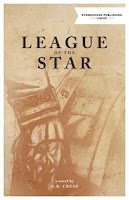
League of the Star by N R Cruise
The saga of a French family exiled in England following the revolution.
#LeaugeoftheStar
Monday, 11 April 2016
Publishers Weekly Reviews Mary Green
I can hardly speak for excitement! What could be more desirable for an author than a review in the most prestigious of literary publications of their upcoming novel? I shall tell you what is - a GLOWING review in such a publication! Here is what they had to say (I did remove one small part because it included a spoiler, and I didn't want to give anything away unexpectedly, but you can read the whole review, spoiler and all, here):
 "Kerr's heroine, Mary Green, delightfully combines Anne Shirley's naivety with Emma Woodhouse's strength of mind in a debut historical novel filled with the magic and romance of Cinderella. Mary, an orphaned ward of her uncle Sir Richard Hargreaves, decides on her 21st birthday to leave behind his Oxfordshire house along with her cousins' and aunt's air of superiority. ...[S]he sets off for a new life in London. Her quest to figure out who she is both biological and metaphorically is a joy. Kerr uses dialogue and colloquialisms that authentically evoke the Regency era. The cast of secondary characters—including Mary's quippy chaperone, Mrs. Burrows; the entitled but loveable Carrington sisters; the resourceful and talented dressmaker Graham; and the puzzling Ingles brothers—all help to draw readers into this fairy tale. Mary is so captivating that readers will readily suspend any disbelief to see her get to a happy ending."
Mary Green comes out on May 1, 2016. To get your hands on a copy, you can pre-order it using the following links, or ask for it at your local bookstore (Audrey's Books in Edmonton will have copies on the shelf). Available in limited edition hard cover or paperback, as well as eBook.
Amazon
Barnes and Noble
iBooks
Chapters/Indigo/Coles
Wednesday, 8 October 2014
IndieBRAG and quality control: the future of self-publishing
The trouble with self-publishing is that there is no quality control. At its heart, this is the reason nobody (or almost nobody) will take independent authors seriously. My book, for example, is self-published, and it is actually a good book, but you kind of have to take my word for it. With traditionally published books, the publishing house has thought the book readable and good enough to put its own money behind it in the belief that people will like it enough and buy enough copies to make their investment worthwhile. And they do know about books and publishing. It is kind of what they do. You can at least trust that, although you may not like the book itself, it will meet certain objective standards. Not so with self-published books.
 Anyone can print any garbage, and nobody can stop them. And people always think their own writing is good. There is no filter. This is part of what makes self-publishing so great. Sometimes, you know you've got a good project, and either you don't want to give it away to some vampire publisher, or you just can't get the attention of traditional publishers for some reason. So instead, you can just do whatever you want. It is like the Wild West. You don't have to convince some stuffy, conservative publisher to back your book just to see it in print. You can put all your own entrepreneurial gusto into pushing your art and doing it your own way. I love this.
 However, because nobody knows you from Adam, and there are SO MANY truly terrible self-published books out there, and nobody has time to sort the wheat from the chaff, nobody will pay you any mind as a self-pub no matter how good your book is: not booksellers, not distributors, and in many cases not even our beloved book bloggers.
There are a few exceptions to this, but as an author you seriously have to work for them. You have no assumptions in your favor. Even assisted self-publishing services that claim to have a good reputation for making your book good don't mean much to anyone and never really will because of greedconomics (a term I just made up right now). They don't risk their own money on you. You pay them.
So basically you are down to reviews and awards as the only ways to objectively demonstrate that your book is ACTUALLY good. Both of these are flawed, or perhaps I should say of limited assistance to the indie author. Reviews and ratings are completely subjective (see my earlier post). And even good ones can't always be trusted because you can actually BUY good ratings and reviews. Plus, you actually have to get people to go to the third-party ratings site and look you up, and read the reviews, and make up their minds as to which ones are legitimate and reasonable and make a decision about what to think. Most people in the book world don't have time to do that for every self-published title that gets shoved in front of them by an eager author claiming their own genius.
 As for awards, they only get given to one title in an entire category. You either win or you don't. Most readers want to read more than one book in a year, and not every book that readers will enjoy will win an award. Also, there are not book awards for every kind of book. Take my book for example. It is Jane Austen fan fiction. There is not a specific book award for that. Sure, there are romance awards, and historical fiction awards, but my book is more niche than what they are looking for. It's not an exact fit.

And you have to find all the book awards, which is a huge job unto itself, and you might miss some because you are an indie author and you are doing this all yourself and you are kind of drowning.
Also, and more importantly, most book awards do not accept submissions from self-published authors, so an indie author's options are limited in that respect. And then, if you are kind of an ignorant first-timer like me, you may not realize that pretty well all book awards only consider unpublished manuscripts, so when you go trying to submit your already published book to the few awards you might have qualified for, you realize you are done for.
Well then, it seems a hopeless business, or so you might think. Or, like me, you might attend a book fair and get to thinking...

...what the self-publishing world really needs is someone to take the guess work out for everyone else. It needs a centralized, independent screening process, a quality-control certification board, if you will. If one reliable organization could review self-published books and just give them a pass or fail, it would save everyone so much work. And if folks could trust the benchmark of that organization, if it was actually consistent and reliable, it would be glory days for everyone. Authors could just show their seal of approval, and get treated like a "proper" published author.
Bookstores could safely stock local, independent books with confidence and without spending their whole lives researching individual titles. Same goes for distributors. Even publishers and agents would know which self-published books would be worth considering. It would be an instant filter for all those players. They would just have to ask the indie author whether or not they had that seal of approval and that would end the matter. No more having to convince people of your book's merit. No more having to sort through reviews and claims to verify whether a book is worth the investment. It would, in a word, be brilliant.
So, who is going to start this quality control certification process? I thought of trying my hand at it myself, and was embarking on putting such a thing together when, Ha-ha! I discovered someone already had!
An international network of readers calling themselves IndieBRAG (Independent Book Readers Appreciation Group) offers this precise service. They are independent and quickly building a reputation for identifying excellence in self-publishing with their Medallion. And, yes, they gave one to Follies Past (thank-you, thank-you). But I assure you, this does not prejudice me in my opinion. I was quite shocked when I discovered them because I was in the process of creating the exact same thing. I was actually kind of relieved because they were doing such a good job of it, so I could leave it to them and move on to other things.

They have a 2-step vetting process by which they apply their standards, and the books are read by multiple readers before a determination is made. Books are judged on plot, writing style, characters, copy editing, dialogue and design. There is no limit to the number of Medallions they award, but they average about a 10% approval rate. Now, that is not to say that 10% of all self-published books meet their standards, only those whose authors know about this service and have the wits to appreciate its value and importance and the wherewithal to actually submit their work.
So far as I am aware, they are the only organization taking on this task, and from what I know about them, they are doing all the things I would wish them to do, making it much easier to relinquish my plan of doing it myself. I believe that this kind of quality control is the missing link that is essential to the future of self-publishing. If you are part of the book world, as it were, and you would like to see good self-published books get the attention they deserve, I encourage you to ask those indie authors who approach you about their book whether or not they have a Medallion from IndieBRAG.
And if you are an indie author, I highly recommend submitting your book to IndieBRAG. It only costs $20, which is less than the submission fees for many book awards.
Please feel free to share any or all of this post. I waive all rights to its content in hope that it might help spread the word about this game-changer.
Melanie Kerr is the author of Follies Past: a Prequel to Pride and Prejudice.
Read Chapter 1 Watch the Trailers Buy the Book
However, because nobody knows you from Adam, and there are SO MANY truly terrible self-published books out there, and nobody has time to sort the wheat from the chaff, nobody will pay you any mind as a self-pub no matter how good your book is: not booksellers, not distributors, and in many cases not even our beloved book bloggers. There are a few exceptions to this, but as an author you seriously have to work for them. You have no assumptions in your favor. Even assisted self-publishing services that claim to have a good reputation for making your book good don't mean much to anyone and never really will because of greedconomics (a term I just made up right now). They don't risk their own money on you. You pay them.
So basically you are down to reviews and awards as the only ways to objectively demonstrate that your book is ACTUALLY good. Both of these are flawed, or perhaps I should say of limited assistance to the indie author. Reviews and ratings are completely subjective (see my earlier post). And even good ones can't always be trusted because you can actually BUY good ratings and reviews. Plus, you actually have to get people to go to the third-party ratings site and look you up, and read the reviews, and make up their minds as to which ones are legitimate and reasonable and make a decision about what to think. Most people in the book world don't have time to do that for every self-published title that gets shoved in front of them by an eager author claiming their own genius.
And you have to find all the book awards, which is a huge job unto itself, and you might miss some because you are an indie author and you are doing this all yourself and you are kind of drowning.
Also, and more importantly, most book awards do not accept submissions from self-published authors, so an indie author's options are limited in that respect. And then, if you are kind of an ignorant first-timer like me, you may not realize that pretty well all book awards only consider unpublished manuscripts, so when you go trying to submit your already published book to the few awards you might have qualified for, you realize you are done for.
...what the self-publishing world really needs is someone to take the guess work out for everyone else. It needs a centralized, independent screening process, a quality-control certification board, if you will. If one reliable organization could review self-published books and just give them a pass or fail, it would save everyone so much work. And if folks could trust the benchmark of that organization, if it was actually consistent and reliable, it would be glory days for everyone. Authors could just show their seal of approval, and get treated like a "proper" published author.
Bookstores could safely stock local, independent books with confidence and without spending their whole lives researching individual titles. Same goes for distributors. Even publishers and agents would know which self-published books would be worth considering. It would be an instant filter for all those players. They would just have to ask the indie author whether or not they had that seal of approval and that would end the matter. No more having to convince people of your book's merit. No more having to sort through reviews and claims to verify whether a book is worth the investment. It would, in a word, be brilliant.
So, who is going to start this quality control certification process? I thought of trying my hand at it myself, and was embarking on putting such a thing together when, Ha-ha! I discovered someone already had!
An international network of readers calling themselves IndieBRAG (Independent Book Readers Appreciation Group) offers this precise service. They are independent and quickly building a reputation for identifying excellence in self-publishing with their Medallion. And, yes, they gave one to Follies Past (thank-you, thank-you). But I assure you, this does not prejudice me in my opinion. I was quite shocked when I discovered them because I was in the process of creating the exact same thing. I was actually kind of relieved because they were doing such a good job of it, so I could leave it to them and move on to other things.
They have a 2-step vetting process by which they apply their standards, and the books are read by multiple readers before a determination is made. Books are judged on plot, writing style, characters, copy editing, dialogue and design. There is no limit to the number of Medallions they award, but they average about a 10% approval rate. Now, that is not to say that 10% of all self-published books meet their standards, only those whose authors know about this service and have the wits to appreciate its value and importance and the wherewithal to actually submit their work.
So far as I am aware, they are the only organization taking on this task, and from what I know about them, they are doing all the things I would wish them to do, making it much easier to relinquish my plan of doing it myself. I believe that this kind of quality control is the missing link that is essential to the future of self-publishing. If you are part of the book world, as it were, and you would like to see good self-published books get the attention they deserve, I encourage you to ask those indie authors who approach you about their book whether or not they have a Medallion from IndieBRAG.
And if you are an indie author, I highly recommend submitting your book to IndieBRAG. It only costs $20, which is less than the submission fees for many book awards.
Please feel free to share any or all of this post. I waive all rights to its content in hope that it might help spread the word about this game-changer.
Melanie Kerr is the author of Follies Past: a Prequel to Pride and Prejudice.
Read Chapter 1 Watch the Trailers Buy the Book
Friday, 4 July 2014
Bribery is best done with cheesecake
Last week I attended my first book fair to promote Follies Past to booksellers and librarians in the Calgary area. I shared the table with my sister who was promoting her beautiful illustrated book, Grandmother's Cabin.
We had ordered a sign for each of our books, and they looked great, if a little large for the space.
 |
| Cover of Grandmother's Cabin - Moonbeam Award Gold Medal Winner |
 |
| Me and Angela getting ready for the book fair |
 |
| Packing our books |
 |
| Our giant signage |
I was encouraged by many to wear my costume to the fair, and I was going to, but in the end, I just hung one gown on a dummy by the table and lay the other across the table. There was, however, a social evening after the first day, and I was spurred on to don one of the gowns, so I did.
 |
| The gown I wore to the social, made from a secondhand punjabi my husband picked up. |
 |
| Our table |
On the second day of the fair, we were given the chance to present to librarians from the Marigold Library System. Thy had tables in the middle of the room, and all the book reps got to present their catalog to them. We thought they might be getting tired after 2 long days of presentations, so we decided to bribe them with a little treat. After some reflection, we settled on individual cheesecakes in mason jars. My sister put them together and they looked adorables!
 |
| Homemade cheesecakes in mason jars - I want to eat this every day! |
We also gave them greeting cards with paintings from my sister's book on them. They seemed delighted with our bribes, and clearly it worked because we just got our first orders from the book fair, which came from the librarians!
So, it never hurts to have stuff to give away when you want people to take an interest in your book. You can order all kinds of promotional materials on line, but the nice thing about the cheesecake I think was that it wasn't promotional. It was made at home, and was just delicious.
Other tips I would share about attending a book fair is to have specially labeled copies of your book, marked as Advance Reading Copies, or Uncorrected Proofs and not for sale. Include all you and your book's contact information on the cover of these copies, including social media links, maybe a QR code. Give these copies to people, if only to browse while at their table. It is a good way to get the word out about your book, and all the reps and publishers do it as standard practice so it makes you look professional. And definitely go and talk to people, other reps as well as booksellers. It is amazing how nice people are. We learned so much just from sitting down and chatting for a bit. And of course, get as much swag as you can. Book reps bring samples of books for booksellers to look through and take to review before they decide whether to purchase them for their bookstore. If they don't give them all away, they sometimes leave some, if not all, behind. You can pick up a lot great reads, which is a nice bonus.
Melanie Kerr is the author of Follies Past: a Prequel to Pride and Prejudice
Read Chapter 1 Watch the Trailers Order Paperback Download eBook
Melanie Kerr is the author of Follies Past: a Prequel to Pride and Prejudice
Read Chapter 1 Watch the Trailers Order Paperback Download eBook
Tuesday, 15 April 2014
This really is the best review ever.
“Follies Past” should be the name of the file folder for every other Jane Austen spin off, because this book blows them all out of the water.
This is by far the best Austen spin off I’ve had the pleasure of reading. Most Pride & Prejudice sequels or prequels read like fan fiction, but Kerr has managed to construct a novel that reads like one of Austen’s own making. It could very well have been a long lost manuscript of Jane’s, documenting the characters of Pride & Prejudice before they encounter the Bennets.
I was so happy reading this, I’ve always longed to get a bit more of Georgiana’s story. Kerr does an excellent job of taking the small tidbits of information we know about characters and giving them a full and lush back story without straying from our vision of them.
I think Caroline Bingley was truly brought to life as well. I both hate her more and less – how is that possible? Through Darcy’s eyes: “He ought to have known that a lady who is too sparkling and clever is also cunning and insolent and not to be trusted.”
Much is learned from Darcy’s perspective without the act of spelling everything out, something other books have done in diary form turning Darcy into an effeminate sap. Instead, from Kerr, Darcy expresses himself naturally and in his own fashion: “Gibbon’s History is worth an entire library of your sentimental drivel. The depth and breadth of his scholarship paints a picture of the Empire that may never be surpassed. How can you compare such an achievement to your works of vapid sentiment.”
Kerr has stayed true to the characters, true to the time, and yet wielded a rich and elaborate story. It’s beautiful and brilliant, and I cannot imagine an Austen fan who would not love it.
My one criticism is this: I ADORE the front cover of this book – but my first and continuous reaction is that it is not a cover that belongs on *this* book. It’s a fun and awesome piece of art, I’d even hang it on my wall I like it so much, but it doesn’t truly portray what is within the pages.
Below, Miss Golightly is caught on film inspecting Kerr’s book. She had the same reaction I did to the cover, “Oh I love that cover! Wait, her writing sounds like it could be Jane Austen! That’s incredible. I’m a little confused by the cover now.”

Five stars for the story. Five stars for the cover art. But only three stars for matching the cover art to the story.
Melanie Kerr is the author of Follies Past: a Prequel to Pride and Prejudice
Read Chapter 1 Watch the Trailers Download eBook Order Paperback
Melanie Kerr is the author of Follies Past: a Prequel to Pride and Prejudice
Read Chapter 1 Watch the Trailers Download eBook Order Paperback
Monday, 7 April 2014
Q: Do I need to read Pride and Prejudice before I read Follies Past?

A: It is not at all necessary. Because my book takes place before Pride and Prejudice, there is nothing you need to know before reading it.
However, if you do plan to read Pride and Prejudice one day, you might want to do so before reading Follies Past, only because reading Follies Past might spoil Pride and Prejudice. It gives away some of the surprises in Pride and Prejudice, discoveries about the past that are crucial to the suspense of the plot.
But I suspect that anyone who has any interest in reading my book probably already knows at least the bare essentials of the plot of Pride and Prejudice, if not all the lines from the mini series. And if they just want to read it because they are my friend, but they know nothing about Jane Austen or Pride and Prejudice, then they probably don't care about a few spoilers.
So, in brief, no. You don't have to read Pride and Prejudice to enjoy Follies Past.
Friday, 4 April 2014
Spotlight on Book Viral
"Weaving a delightfully feisty tale that courts intrigue, she admirably maintains the tone and tenor of Austen's original work, her bygone era lovingly resurrected with an infallible eye for detail and a keen ear for dialogue..."
Click the Book Viral button on the right to see the full review and spotlight!
Melanie Kerr is the author of Follies Past: a Prequel to Pride and Prejudice
Read Chapter 1 Watch the Trailers Download eBook Order Paperback
Click the Book Viral button on the right to see the full review and spotlight!
Melanie Kerr is the author of Follies Past: a Prequel to Pride and Prejudice
Read Chapter 1 Watch the Trailers Download eBook Order Paperback
Wednesday, 5 March 2014
Q: Why doesn't your book cover look like a Jane Austen fan fiction cover?
A: I have received a variety of opinions about the cover of my book (on the right), and opinion is certainly divided. Some people say it is not pretty enough, while other say they love how artsy and original it is. The young man who boards in our basement told me he thought the colour choices were very current, very vogue, and he is 21 and knows about these sorts of things. Actually, he didn't say vogue. I think he said "in" - the dark red in particular is apparently very in right now.
Essentially, I didn't want my cover to look like the sort of thing most often seen on Jane Austen spinoff novels. I didn't want it to look like a romance novel, or a novel just for girls, because it really isn't. I mean, it is a love story, but an Austenian love story, with the protagonists acting properly, and the conflict being of good judgment and self-doubt.
I thought about doing a few different things for the cover, but they had already been done many times, like fashion-plate type images, or ink drawings on a creamy background.
Then there were the floral backgrounds with caliagraphic text, or pictures of English country homes with Brownian sloping greens. I do like a lot of the covers that meet these descriptions, but I just wanted to do something that hadn't been done before, something edgy, and bold, yet historical in its references, and still sort of folk-art in its styling. I also wanted it to be just dark enough to be mysterious, but still playful.
The other option was to try to look like a work of classic English literature, and use an image of an old oil painting, or just a plain, monochrome cover with black or gold embossed border. But those didn't seem eye-catching or interesting enough.
In the end, I sat down with Angela Rout, a visual artist, and she showed me some of her design work. I was intrigued when I saw a paper-cutting that she had done for some promotional materials for a local theatre production. I really liked the fact that this was a very old and simple art form, and yet was very graphic and clean and kind of contemporary in its effect. I started to see examples of it everywhere, and I was determined to use it for my cover design.
Although the image we put together is simple, it contains a lot of detail. I wanted to include the image of a man waiting at a door because for me this created tension and intrigue. Who is this man? We cannot see his face. Who is he waiting for? Is he a welcome guest? Is he calling on a lady? What is his purpose?
 The general effect of the image reminds me of a cameo, or a silhouette portrait, like the one of Jane Austen that we so often see. The images around the edge of the oval, of ladies and carriages and tea, etc. are like a frame on a pendant. The background is an image of an old piece of parchment, which, of course, looks old, like a lost manuscript discovered 200 years later. The vines creep over the letters, suggesting an overgrown ruin, a folly perhaps, about to be discovered in the woods.
I thought perhaps people might be interested in seeing some of the images that I put together as inspiration, or that contained elements that I thought I might like to include in the cover design. Not all of them bear any sort of resemblance to the final product, but here they are. I searched through a bunch of images of book covers on line, as well as just images that captured my imagination. Below are a few that I liked.
 I loved the architectural quality of this one, the way it showed so much of life at the time without romanticizing it, and the thematic content of having the inside and outside worlds exposed. This was a theme of my book, and something I have always perceived in Jane Austen's works as well. Plus it is sort of pretty in its colours, and you can tell what it is right away, but there is so much to keep your interest once you start to study it.
 I liked the graphic quality of this one, the way it is so simple and yet so complex. In a way, my own cover ended up resembling this image the most of all the ones I looked at. I find this cover intriguing. It makes me want to read the book. It is obviously about a bygone time, and it captures a sense of excitement, and folly.
 This one just made me sigh. I thought it was so pretty and kind of mystical, romantic and elegant. It is also very simple but with a lot of mood. The lamp posts are from the Regency era, and are in Brighton, so the seaside resort, which is where my book ends up, is referenced, and the period is correct also. The corner pieces on the final cover design are inspired by these lamp posts, as are the actual lamp posts on the central design.

This one was an unexpected take on a typical image - the mansion on the green. I liked how stylized it was, and yet very hand-made. It looks charming, like it doesn't take itself too seriously and yet is the result of an artist's application. It is very inviting and again, makes me want to read the book. I expect it to be light and enjoyable, without being trite.
 This cover might have been my favourite. I just loved the texture of the background, the pretty simplicity of the font, and of the central image. It is delicate and elegant, and yet sturdy and warm. It looks kind of magical, but not silly, graphic, yet old-fashioned. It almost glows.
 I thought this cover was adorable. I loved the mixed media. I loved the handwritten text. I loved the imaginary character in a real building. It raises so many questions with just one tiny addition of a drawing to an otherwise very plain photograph. I loved the solid, pale blue sky, the way it looks like you could just float away in it.
 This is a picture of a necklace that has been re-set, placed on the bill for the work done. It is from the Regency, and you can see that it has a similar composition to my eventual cover design, including the old parchment background. I just thought it looked pretty, and old-fashioned, and elegant. It is also sort of objet d'art in the way it includes an ordinary bill, which is a practical item, but which carries so much history. It is a piece of evidence, a piece of the past.
The design we came up with in the end may yet be adjusted, or scrapped all together, and I know it is not everyone's idea of what the cover to a book like mine ought to look like. I have even been told that it doesn't reflect the quality of my writing, but we all have different tastes, and that is all right. I think my cover is very sophisticated and I am quite proud of it, particularly because it doesn't look like what you would expect to be on my cover.
Melanie Kerr is the author of Follies Past: a Prequel to Pride and Prejudice
Read Chapter 1 Watch the Trailers Order Paperback Download eBook
Essentially, I didn't want my cover to look like the sort of thing most often seen on Jane Austen spinoff novels. I didn't want it to look like a romance novel, or a novel just for girls, because it really isn't. I mean, it is a love story, but an Austenian love story, with the protagonists acting properly, and the conflict being of good judgment and self-doubt.
 |
| Regency Fashion Plate |
I thought about doing a few different things for the cover, but they had already been done many times, like fashion-plate type images, or ink drawings on a creamy background.
 |
| A fine house, happily situated |
The other option was to try to look like a work of classic English literature, and use an image of an old oil painting, or just a plain, monochrome cover with black or gold embossed border. But those didn't seem eye-catching or interesting enough.
In the end, I sat down with Angela Rout, a visual artist, and she showed me some of her design work. I was intrigued when I saw a paper-cutting that she had done for some promotional materials for a local theatre production. I really liked the fact that this was a very old and simple art form, and yet was very graphic and clean and kind of contemporary in its effect. I started to see examples of it everywhere, and I was determined to use it for my cover design.
Although the image we put together is simple, it contains a lot of detail. I wanted to include the image of a man waiting at a door because for me this created tension and intrigue. Who is this man? We cannot see his face. Who is he waiting for? Is he a welcome guest? Is he calling on a lady? What is his purpose?
The general effect of the image reminds me of a cameo, or a silhouette portrait, like the one of Jane Austen that we so often see. The images around the edge of the oval, of ladies and carriages and tea, etc. are like a frame on a pendant. The background is an image of an old piece of parchment, which, of course, looks old, like a lost manuscript discovered 200 years later. The vines creep over the letters, suggesting an overgrown ruin, a folly perhaps, about to be discovered in the woods.I thought perhaps people might be interested in seeing some of the images that I put together as inspiration, or that contained elements that I thought I might like to include in the cover design. Not all of them bear any sort of resemblance to the final product, but here they are. I searched through a bunch of images of book covers on line, as well as just images that captured my imagination. Below are a few that I liked.
This one was an unexpected take on a typical image - the mansion on the green. I liked how stylized it was, and yet very hand-made. It looks charming, like it doesn't take itself too seriously and yet is the result of an artist's application. It is very inviting and again, makes me want to read the book. I expect it to be light and enjoyable, without being trite.
I thought this cover was adorable. I loved the mixed media. I loved the handwritten text. I loved the imaginary character in a real building. It raises so many questions with just one tiny addition of a drawing to an otherwise very plain photograph. I loved the solid, pale blue sky, the way it looks like you could just float away in it.The design we came up with in the end may yet be adjusted, or scrapped all together, and I know it is not everyone's idea of what the cover to a book like mine ought to look like. I have even been told that it doesn't reflect the quality of my writing, but we all have different tastes, and that is all right. I think my cover is very sophisticated and I am quite proud of it, particularly because it doesn't look like what you would expect to be on my cover.
Melanie Kerr is the author of Follies Past: a Prequel to Pride and Prejudice
Read Chapter 1 Watch the Trailers Order Paperback Download eBook
Tuesday, 25 February 2014
Q: What is the handsomest man in the world doing in your book trailer?
 Ah, Antonio Cupo... the face that launched a thousand hits on youtube. I have had, as you might imagine, quite a number of inquiries on this subject. Consequently, I thought I should do a post to tell everyone all about it, and a bit about making the trailers in general.
Here is a picture which might convince you of how 15-year-old Georgiana Darcy, despite all of her sense and timidity, might be powerless to refuse an offer of elopement with George Wickham. After all, what would you, at that age, have done if he had burst into your Mayfair breakfast room declaring his undying affection?
I have known Antonio for years, or rather I knew him many years ago, and when I was writing “Follies Past” I imagined him as Mr. Wickham. I always thought that if I were lucky enough to have my book made into a film or television adaptation, then he would have to play that part. His appearing in the role in the trailers is just one of many incredible serendipities that came to pass in their making.
Originally, I planned to dress in costume, hidden by a trench coat, and sneak around Fort Edmonton Park followed by a friend who would intermittently film me with an iPhone. Clearly, it got more involved.
 Firstly, I decided to hold auditions, to get more people involved and invested in the project, and perhaps spread the word a bit. My co-worker offered to book the Varscona Theatre for me to hold the auditions at, which legitimized the whole thing in an almost fraudulent way, and tempted a number of very good actors to come out, none more than the illustrious Mr. Troy O’Donnell, of the Freewill Shakespeare Company, among other things. When he responded to my audition notice asking to be considered for the role of the butler, I believe I fell in a fainting fit upon the sofa. Not wanting to deceive him, I explained that this was not a real gig, zero budget and no actual lines, but he still wanted to do it, and we were overjoyed to have him. I think his cameo is stellar: “Mr. Wickham to see Miss Darcy.” Perfect!
 Also, having Gabby Bernard play Georgiana was a bit of a dream. I worked with her on a theatre festival a couple of years ago, and always thought she looked just like Georgiana ought to. Plus, she has great presence and her accent is terrific. Even the non-speaking roles were brilliantly done, like Dolores Kohler, who plays the housekeeper, was so charming in moment on screen.
On top of that, we got to film at Rutherford House, which is such a beautiful venue. But I don’t think anything could top my amazement and thrill at having Antonio play Wickham.

At first he said he couldn’t. He was out of town on vacation. The fact that he even responded made me bold to ask again, offering to move the filming date to accommodate him. To my eternal shock and unending gratitude, he said yes. I felt like a school girl who had just been asked to the prom by the captain of the football team.

So Antonio came, and all of Edmonton swooned in his company. Not only has he possibly the prettiest face on the planet, but also the most generous spirit and charming manner, not to mention a terrific voice and solid acting skill. And furthermore, without him, the trailers would not have been half so good as they are for a number of other reasons.
Antonio happens also to be quite a talented amateur photographer, and offered us the use of his high-end camera and lenses, as well as lights and sound equipment, and a tonne of invaluable expertise on film-making gleaned from years of experience on sets of actual productions with actual budgets and actual filmmakers.

So, that is the story of our making the trailers for Follies Past, and of the striking face of Mr. Wickham.
Melanie Kerr is the author of Follies Past: a Prequel to Pride and Prejudice
Read Chapter 1 Watch the Trailers Order Paperback Download eBook
Tuesday, 10 December 2013
Launch Party Success
Thank you to everyone who came to the launch on November 26. Here are a few photos.


Mr. Darcy and his sister, Georgiana, welcome guests to the Hotel Macdonald, in all its Christmas splendour

Dramatic reading with terrific actors

Me, Melanie Kerr, enjoying the elegant surroundings

A Napoleonic Balad by Edmonton's most amazing vocalist

Paperbacks for sale!
Thanks to everyone who came and made it such a brilliant success. Enjoy your books.
Monday, 9 December 2013
Book Signing at Cally's Teas
 Sunday, December 15, 2:00 pm
Cally's Teas
10151 - 82 Av. Edmonton
Enjoy cozy drinks, tasty treats, and reading aloud.
Meet the author, and pick up a signed copy of Follies Past: a Prequel to Pride and Prejudice.
Saturday, 7 December 2013
Monday, 18 November 2013
My First Review!
It may be short, but I'll take it. Thanks Jan P, whoever you may be. Here's what she said:
"This is a very good book. If you are wanting a Darcy and Lizzy story this is not it. Georgina and Clair, Wickham and Mrs Young are the main character of this work. It is well written and the characters are believable."
That's pretty darn good, if you ask me. Click here to read it on Amazon for yourself.
Wednesday, 6 November 2013
Book Launch announced!
 It is with
great perspicacity and anticipation that I announce the details of my
forthcoming book launch. Firstly, the date of the launch is particularly
auspicious in its identity with the date of the Netherfield Ball. Yes, the
launch shall take place on the 26th of November (“when we were all
dancing together at Netherfield.” – Mr. Bingley).
Secondly, I
am bursting with delight in sharing with you that I have somehow contrived to
hold the event at no less grand a location than the Fairmont Hotel McDonald – possibly
the most historic and charming building in the fair city of Edmonton.
If you
happen to be local to Alberta’s frozen capital, or feel inclined to travel here
for the occasion, then don your best Regency apparel (if you have any, or don’t
if you do not), and make your way to Jasper and 100th to celebrate
with frolicking good fun, the launch of Follies Past: a Prequel to Pride and
Prejudice.
Festivities,
including cream tea, dramatic reading and more, begin at 7:30 pm in the
Edmonton Room.
Friday, 1 November 2013


Subscribe to:
Posts (Atom)